Towing Strap vs Ratchet Tie-Down: What Buyers Must Specify
Separate towing and recovery equipment from cargo-restraint assemblies, then request the right rating and end fittings.
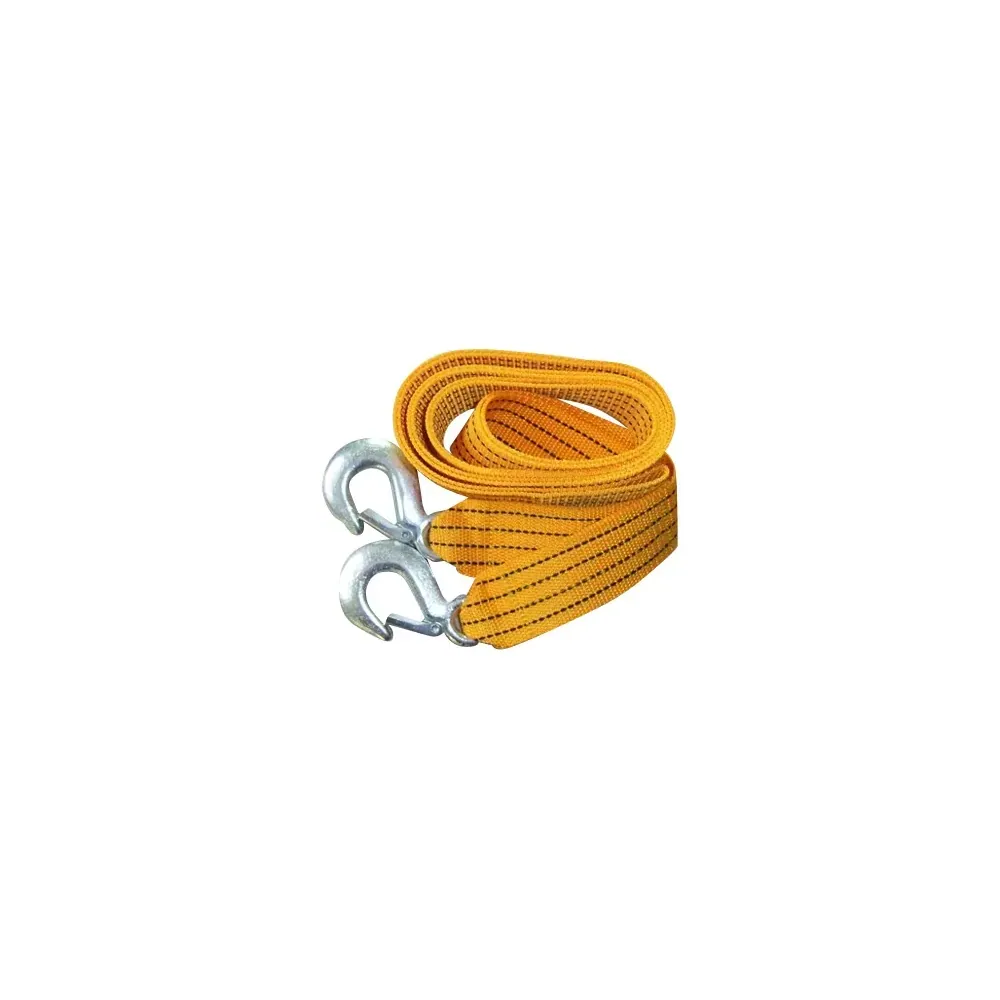
Different jobs require different assemblies
A towing or recovery strap connects a vehicle to a pulling point. A ratchet tie-down restrains cargo during transport by tensioning webbing around an anchor system. Neither should be treated as an overhead lifting sling. Similar webbing colours do not establish a common rating.
Check the complete assembly
For a tow strap, specify the intended recovery method, length, width, end loops or hooks and compatible connection points. For a tie-down, specify webbing width, ratchet buckle, end fittings, length and complete assembly lashing capacity. Hardware changes can change the weak link.
Ask for traceable rating information
The older JILI tow-strap photographs show several distinct end constructions but do not provide reliable numerical ratings. Request current labels, tested assembly data and instructions before selecting a capacity. Do not transfer a rating from one photographed product to another.
Create a usable quotation brief
Include destination market, quantity by configuration, packaging, branding and required documents. Provide a drawing or photo of the attachment points. A precise brief reduces substitutions between tow straps, recovery straps and cargo tie-downs.